 VastuVidhi
01 / THE PHYSICAL ROOM
What you can observe
Daylight, warmth and airflow depend on openings, shade, climate and how a room is used.
Follow the light across a house. Look at what can be observed, and where tradition offers a different kind of interpretation.
Follow the sunlight ↓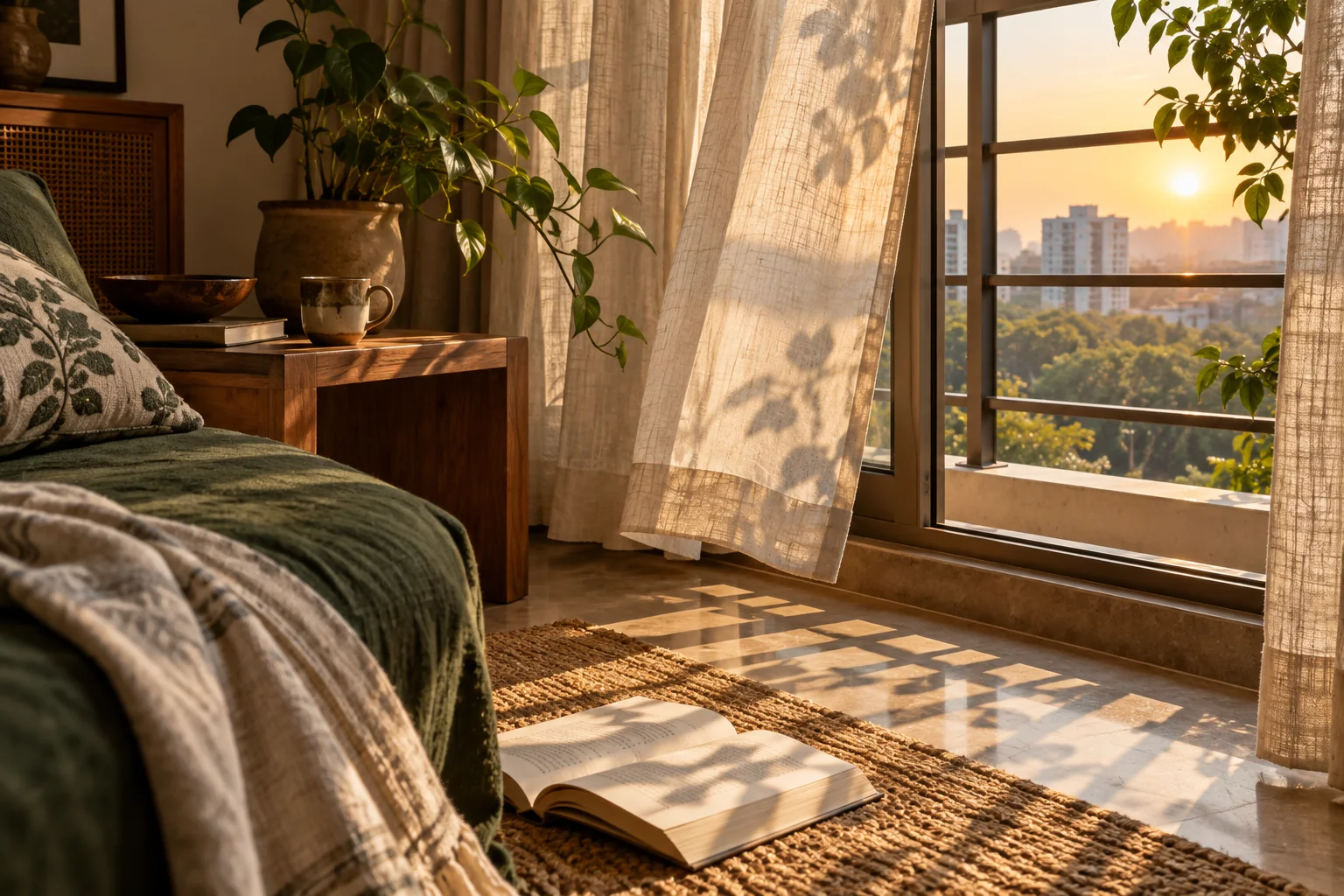
Daylight, warmth and airflow depend on openings, shade, climate and how a room is used.
Vastu gives a placement symbolic meaning. A reading explains that interpretation in the context of your plan.
Choose a time to see how the sun’s position changes. An actual room also depends on nearby buildings, shading, weather and season.
In a home with an unobstructed east-facing opening, morning sun may reach that room. A neighbouring tower, balcony or shutter can change the result.
Air moves when openings, pressure and weather allow it. This simplified diagram shows a possibility, not a measurement of your home.
One window can help, but it may not give air a clear route across the room. Actual movement depends on wind, temperature, other openings and outdoor conditions.
Flow in this diagram means moving air. In traditional Vastu, “energy” also has a symbolic meaning; this illustration does not measure it.
When does a room brighten, and when does light become glare?
Does an afternoon-facing window make this room hard to cool?
Can a kitchen clear smoke? Does the bathroom stay damp?
Traditional language sometimes associates placements with health, relationships or prosperity. We can explain that meaning as part of the tradition. We cannot infer from a room’s direction that it caused depression, arguments or financial loss.
“Energy flow” may be a useful metaphor for experiencing a space. It is not a measured force that proves those outcomes. For a concern about health or safety, speak with an appropriate professional.
Turn observation into action